
Family-owned · Bastrop Local
Kitchen Cabinet Painting Contractors Who Prep the Right Way
Spray-finish results, clean masking, and a painter who picks up the phone.
Free estimate
Tell us what you need
Three fields. It reaches a person here, not a call centre.
Cabinet Painters Who Skip Nothing on Prep
If you're searching for kitchen cabinet painting contractors, here's the honest answer most sites won't give you: the paint itself is almost never what fails. It's the prep. Grease, sanding dust, and skipped primer steps are why cabinets painted by the wrong crew start chipping before the year is out. Julio Cardona has been in the trade five years and does cabinet work himself, not through a subcontractor. Call (512) 786-6801 for a free estimate and hear exactly how he'd approach your kitchen.
A cabinet painting job can range widely depending on the number of boxes and doors, the current finish condition, whether hardware needs masking or removal, and the level of sheen you want. Heavily lacquered or previously painted cabinets need more surface work before a new coat will bond properly. Raw wood takes primer differently than MDF. Surface preparation accounts for the majority of the labor, and it's the step that separates a result that lasts from one that peels. Every job is different, contact Cardona Painting for an accurate estimate.
What Cabinet Painting Actually Involves
Most of the work happens before a drop of paint touches the door.
The Process
How Julio Works Through a Cabinet Job
- 01
Remove, Clean, and Prep
Doors and hardware come off first. Every surface gets degreased and sanded. Skipping this step is what causes peeling, and it's what separates a professional result from a weekend DIY gone wrong.
- 02
Prime and Inspect
Bonding primer goes on the bare or previously finished surface. Julio inspects for any grain raise or adhesion issues before laying down a finish coat. If something's not right, it gets fixed here, not after the top coat.
- 03
Finish Coats and Rehang
Final paint goes on in controlled coats, usually sprayed for doors and drawer fronts. After curing time, doors are rehung, hardware is reinstalled, and the kitchen is left clean.
Proof, not promises
Recent Work
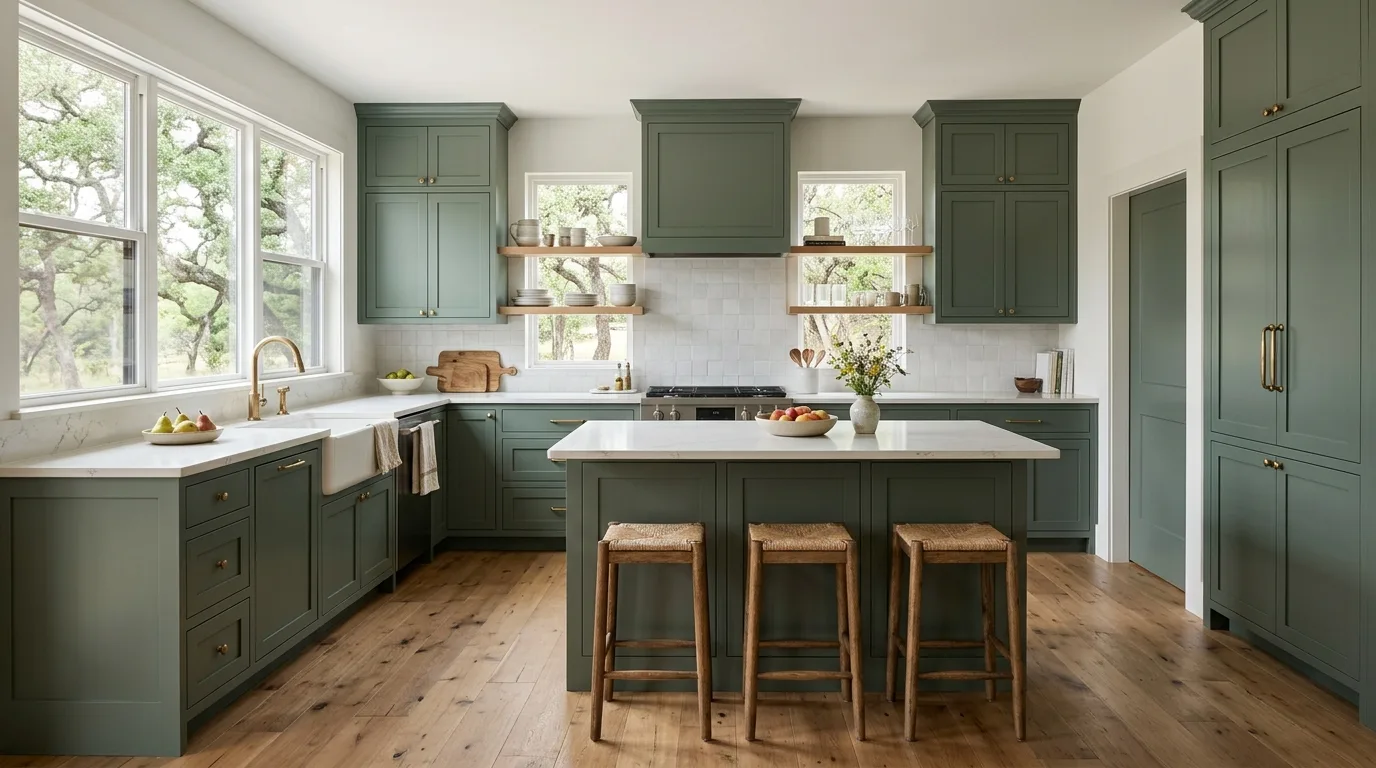
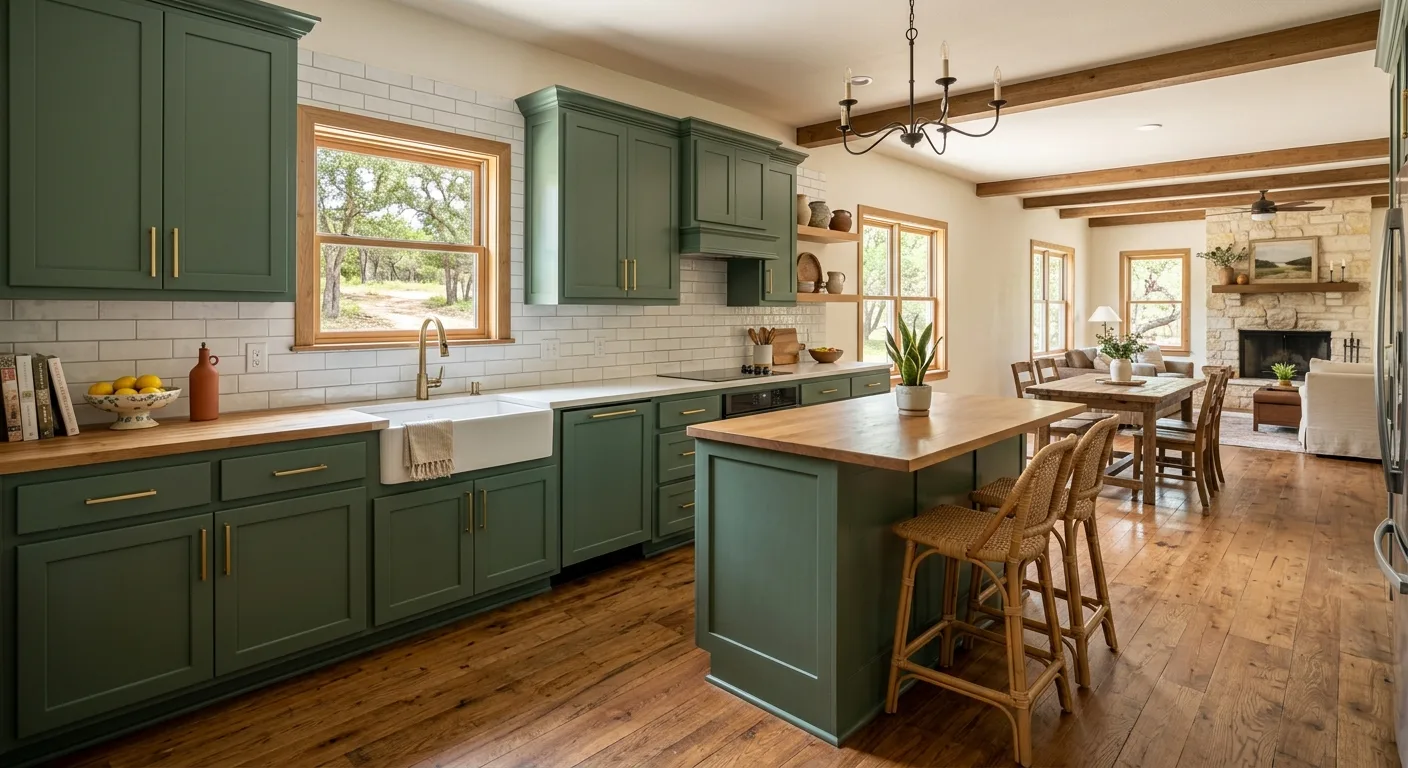
A few recent projects around Bastrop. Every one handled start to finish by Julio Cardona, not passed to a subcontractor.
What to Expect
Signs of a Cabinet Job Painted Correctly
No Brush Marks on Flat Surfaces
Spray application on doors and drawer fronts eliminates the stroke lines you get from rolling or brushing. If you can see brush marks on finished cabinet doors, the job was rushed.
Sharp Lines at the Edges
Good masking keeps paint where it belongs. Sloppy edges where the cabinet box meets the wall or countertop are a prep and masking failure, not a paint failure.
Finish That Doesn't Chip at the Hardware
Hinge points and pull locations are high-contact areas. If those spots chip within months, the primer bonding was skipped or done in a hurry.
Consistent Sheen Across All Surfaces
Doors and frames should match. Inconsistent sheen usually means different application methods were used on different surfaces without accounting for the variation.
Cabinet Refinishing vs. Cabinet Painting
Choosing a Cabinet Color That Lasts
The color gets the attention. The sheen and the prep decide whether it holds up.
When people start looking at painting kitchen cabinets, color is usually the first thing on their mind. The good news is that almost any color works on cabinets, so the choice comes down to what you want the kitchen to feel like. Whites and off-whites stay the most popular because they open up a room and don't tie you to a trend. Soft greens like sage have taken over a lot of kitchens lately, and deep navy on a lower run of cabinets with a lighter upper gives you contrast without going dark everywhere. Warm greiges and muted grays sit in the middle and hide everyday kitchen wear better than a bright white does.
Here's the part most people don't hear until the job is half done: on cabinets, the sheen matters more than the hue. A beautiful color in a flat finish will show every fingerprint and won't wipe clean, which is the opposite of what you want on a surface you touch all day. Satin and semi-gloss are the standard for kitchens because they clean up without dulling, and they hold a crisp look at the door edges. Julio will walk you through how a color reads in your actual kitchen light before anything gets sprayed, because a swatch under store lighting and that same color over your sink can look like two different paints.
Kitchen cabinets painted colors also need to be judged against what's already in the room. Countertop tone, backsplash, flooring, and the amount of natural light all pull a color one way or another. A color that looks crisp in a bright south-facing kitchen can read cold and gray in a room that only gets morning light. The practical move is to settle on the hue, then let the finish and the prep do the heavy lifting. A well-prepped satin enamel in a simple white will outlast and outlook a trendy color that was rushed onto a greasy surface. Want a straight opinion on a color you're considering? Call (512) 786-6801 and talk it through with Julio.
Questions About Cabinet Painting
Do cabinet doors need to be removed to paint them properly?
What kind of paint holds up best on kitchen cabinets?
How long does cabinet paint need to cure before I can use the kitchen normally?
Can you paint laminate or already-painted cabinets?
Is cabinet painting worth it compared to buying new cabinets?
What's the best paint color for kitchen cabinets?
Do dark cabinet colors need more coats than light ones?
Ready to update your kitchen? Call Julio.
No dispatcher, no crew you've never met. The person who quotes it is the person who paints it.